
Running a Sex Offender Check in Morgan County
The Illinois Sex Offender Registry is the main statewide search. Illinois State Police says it updates the database daily. Searchers may combine identity and geographic filters, choose Morgan in the county field, or open Map Your Neighborhood for an address-based view.
Begin with only first and last name when checking a person, as ISP recommends, and add other fields only to narrow the list. For place-based safety planning, search an address or click a map location. The public interface does not document fixed radius choices, so do not assume one.
Jacksonville Police or Morgan Sheriff
Registration responsibility follows where a person lives. Someone inside Jacksonville municipal limits ordinarily registers with Jacksonville Police. A registrant in unincorporated Morgan County reports through the Morgan County Sheriff. Other incorporated municipalities use their own police department when one has jurisdiction.
That local split matters when a profile seems wrong. ISP directs corrections to the local registering law-enforcement agency. For unincorporated addresses, the sheriff is at 300 West Court Street, Jacksonville, phone 217-243-6123. For an address within Jacksonville, start with city police. Call first to confirm the right office and any appointment practice.
The local office verifies required information and forwards registry data into the state system. ISP manages the public statewide search, but it is not the first office to correct a disputed street address or local compliance fact. A caller should identify the profile, explain the suspected error without publishing private details, and ask which registering agency owns the entry. Immediate safety threats still belong with emergency services, not an administrative correction request.
Searching the Illinois Sex Offender Registry
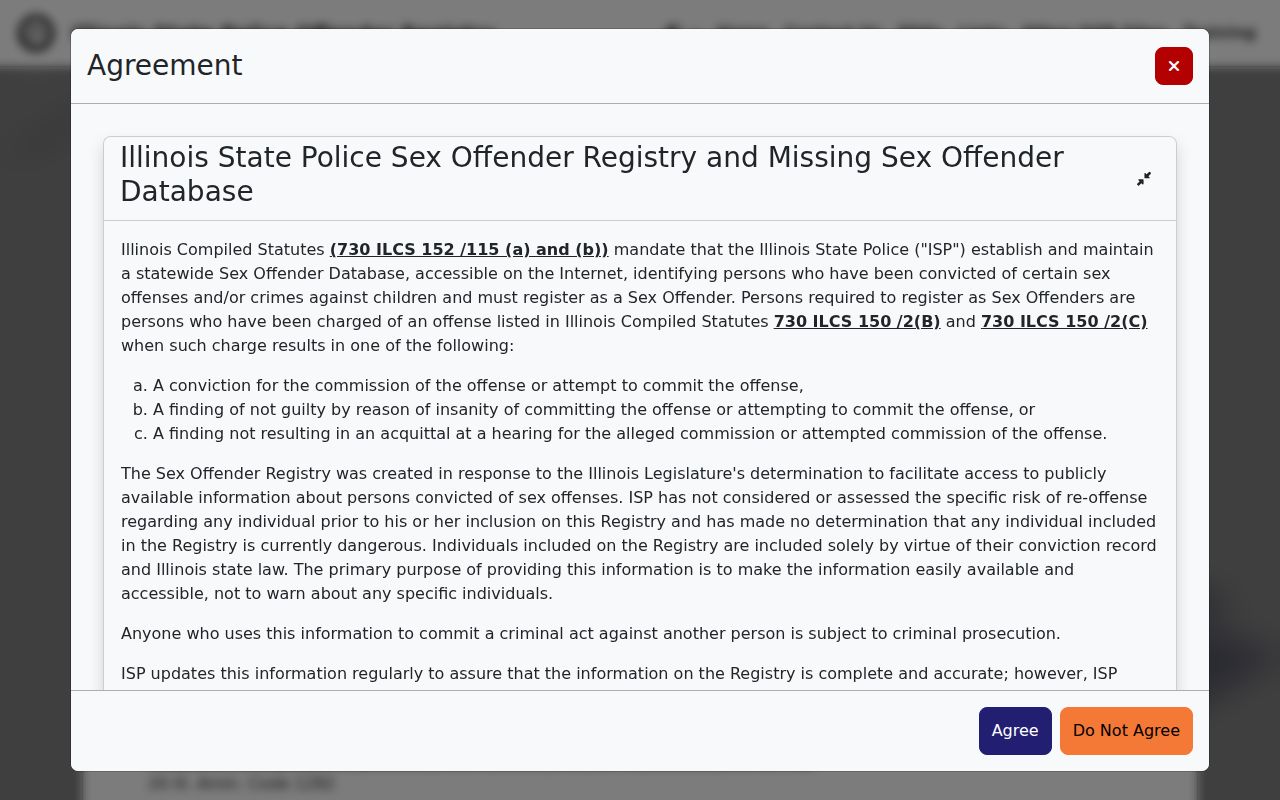
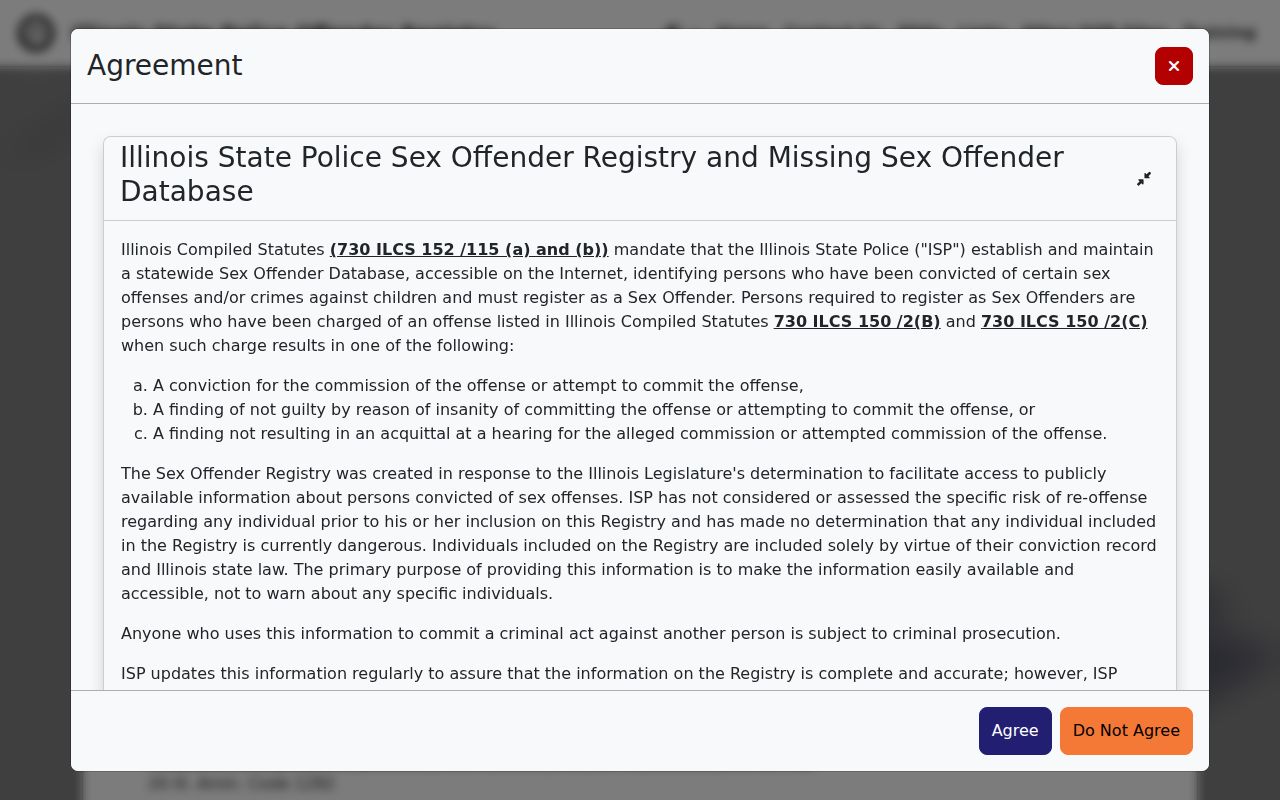
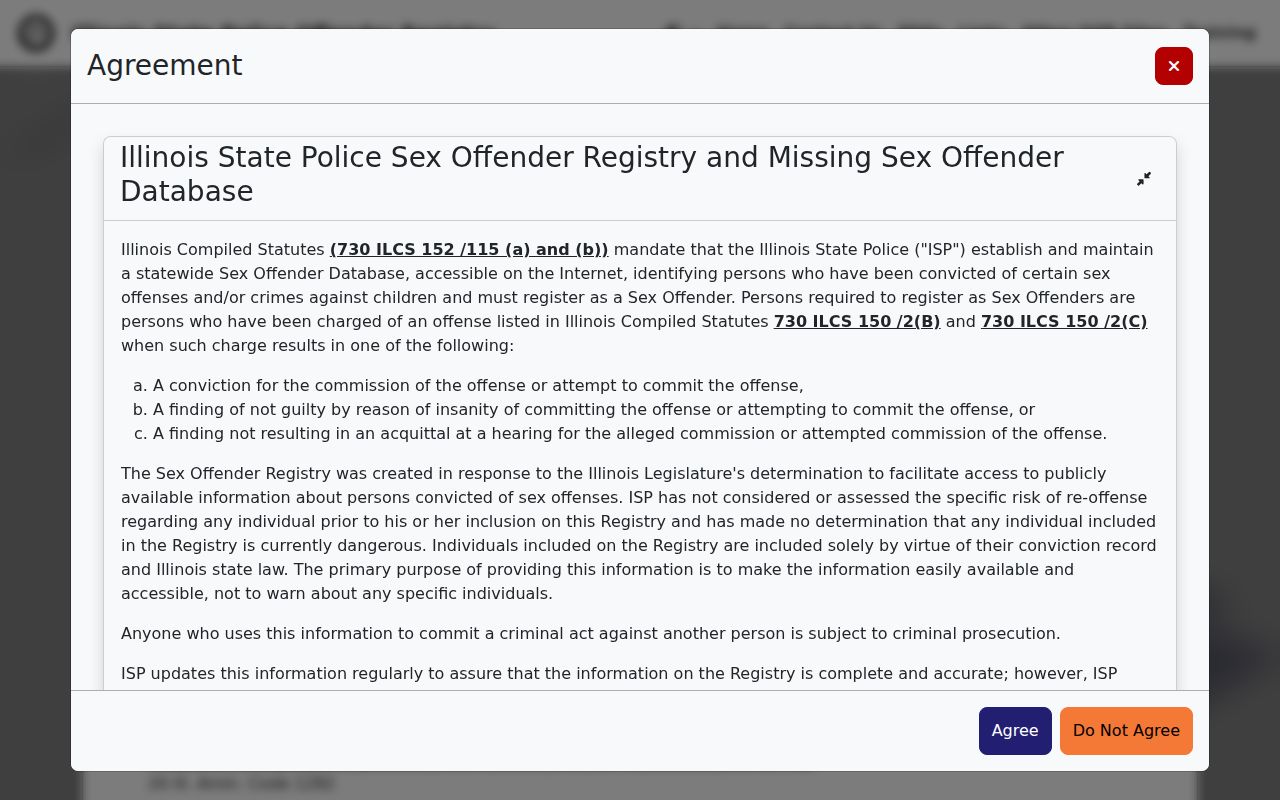
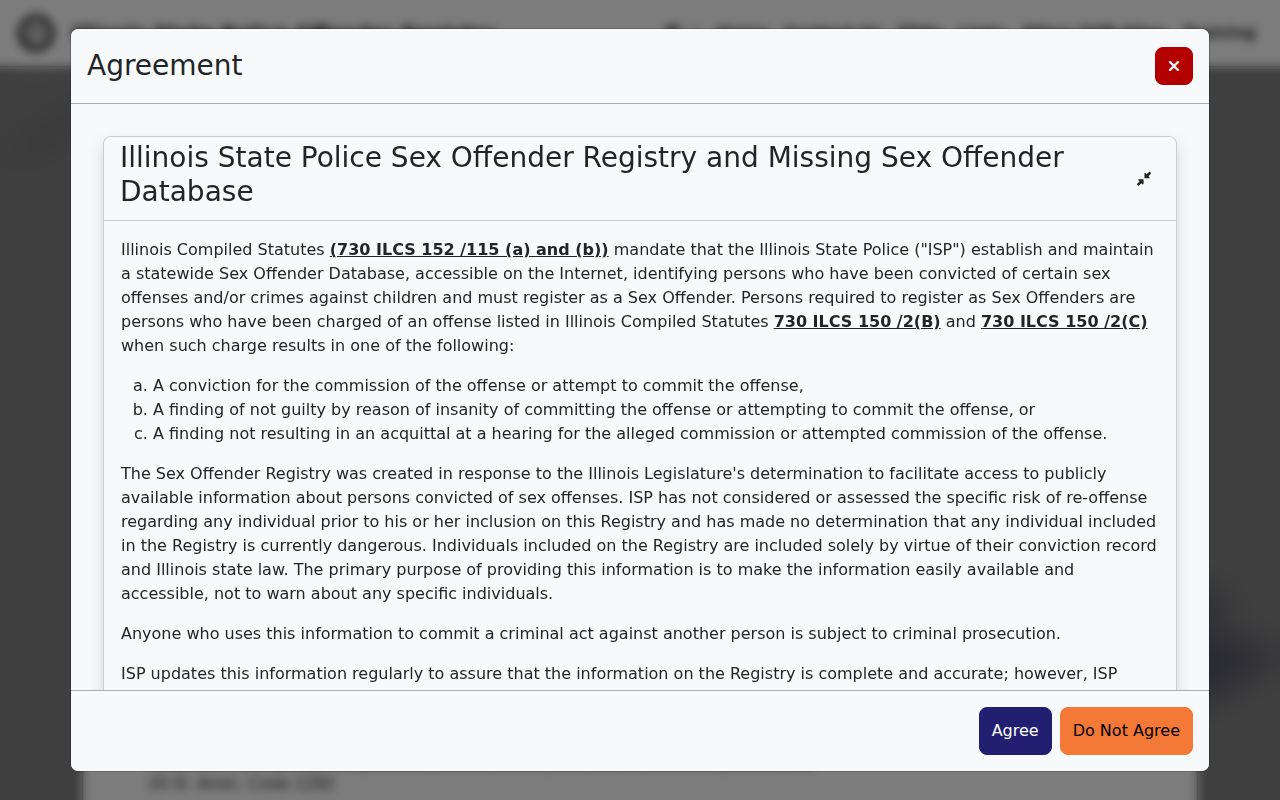
The registry requires acceptance of its disclaimer before access. Use official controls and keep a note of the profile's “as of” date because residence and compliance data can change.
- Open the ISP registry and accept the conditions of use.
- Search by first and last name, or use city, ZIP, Morgan County, or the neighborhood map.
- Compare results by date of birth, physical details, status, address, and registering agency.
- Open the profile, review registration and offense fields, then verify important facts with the local agency or circuit clerk.
| Field Label | Type | Required | Notes |
|---|---|---|---|
| First Name | Text | No | ISP recommends a name-first search |
| Last Name | Text | No | Use with first name before adding filters |
| Date Of Birth | Date | No | Narrows identity matches |
| City / Zip Code | Text | No | Limits results by place |
| County | Select | No | Choose Morgan; menu also includes incarcerated and out-of-state |
| Status / Homeless / Offender Type | Select or checkbox | No | Additional public filters |
| Map Your Neighborhood | Map | No | Enter an address or click a location |
Name Search or Neighborhood Map
A name search is strongest when the reader already knows whom to verify. The map answers a different question: what public entries are plotted near a selected Morgan County location? Click a yellow marker to see details in the map pane, then open the full profile before relying on the marker.
Neither method proves that every registrant is at the plotted point at that moment. Confirm the update date and registering agency. A map also should not be used to infer that an unmarked home is risk-free. Registry inclusion follows statute and registration status, while many crimes and people fall outside this notification system.
Location searches can also miss the intent of a name-based inquiry. A profile may be categorized as incarcerated, out of state, or homeless rather than tied to the expected city address. Conversely, similar names can create a false match. Use the county, status, date of birth, physical description, and registering agency as verification points, but avoid treating any single field as conclusive when official sources conflict.
What a Registry Profile Shows
An official ISP registry profile layout shows identity, location, registration, and offense fields. The manifest image records the interface and field arrangement only; no private identity is repeated here.
| Name & Aliases | Published name, alias names, birth date, and alias birth dates when shown. |
|---|---|
| Photo & Description | Current and dated photo history plus height, weight, sex, race, and related descriptors. |
| Registered Address | Street, city, state, ZIP, and registering agency when publicly available. |
| Offense Information | Crime descriptions, statutory category, conviction county, and age fields when shown. |
| Duration | Ten-year or lifetime presentation, not a federal-style public tier label. |
| Registration Status | Compliance, original and recent registration dates, and the profile's update date. |
Registration agencies collect more data than appears publicly. Employment details, phone numbers, internet identities, vehicles, and other required information should not be described as though every item appears on the profile.
Profiles Are Not Full Histories
A registry entry is a statutory safety notice. It is not a complete rap sheet and should not replace the criminal case file. The profile itself directs readers to IDOC for relevant custody or parole information, the circuit clerk in the conviction county for court records, and the UCIA route for public Illinois conviction information.
For a Morgan County conviction, use the Morgan County Circuit Clerk and Judici. If the conviction occurred elsewhere, contact that county's clerk. A registry category or offense description should be read with the final judgment, not expanded into claims the official profile does not make.
The distinction protects accuracy. Court records show the filed counts, later amendments, disposition, and sentence. IDOC may show current custody or mandatory supervised release. ISP's public UCIA response is limited to conviction information. None of those systems should be presented as if it adds facts to a registry profile that its official fields do not disclose.
Registration Requirements and Levels in Illinois
Illinois does not publish registrants through a simple federal Tier I, II, and III scheme. The state uses ten-year and lifetime duties, with different in-person verification schedules. The ISP registry FAQ explains duration, frequency, and fees.
| Illinois category | Duration | In-person verification |
|---|---|---|
| Sex offender not designated for lifetime | 10 years under the applicable start rule | Annually |
| Sexual predator | Natural life | Annually unless another rule applies |
| First-degree-murder registrant under SORA | Natural life | Annually |
| Sexually Dangerous or Sexually Violent person | Natural life | Every 90 days |
| Qualifying SORA violation conviction | May extend or restart the term | Every 90 days for the duration |
Changes generally must be reported within three days. ISP lists a $100 initial fee and $100 annual fee. Those obligations apply to registrants; they are not fees for members of the public to search the registry.
A recent registration date is not the same as an original registration date. The former can reflect a required verification or updated information, while the latter marks the first recorded registration. Read both fields with the duration and status instead of treating the newest date as a new offense.
Morgan County Reporting Rules
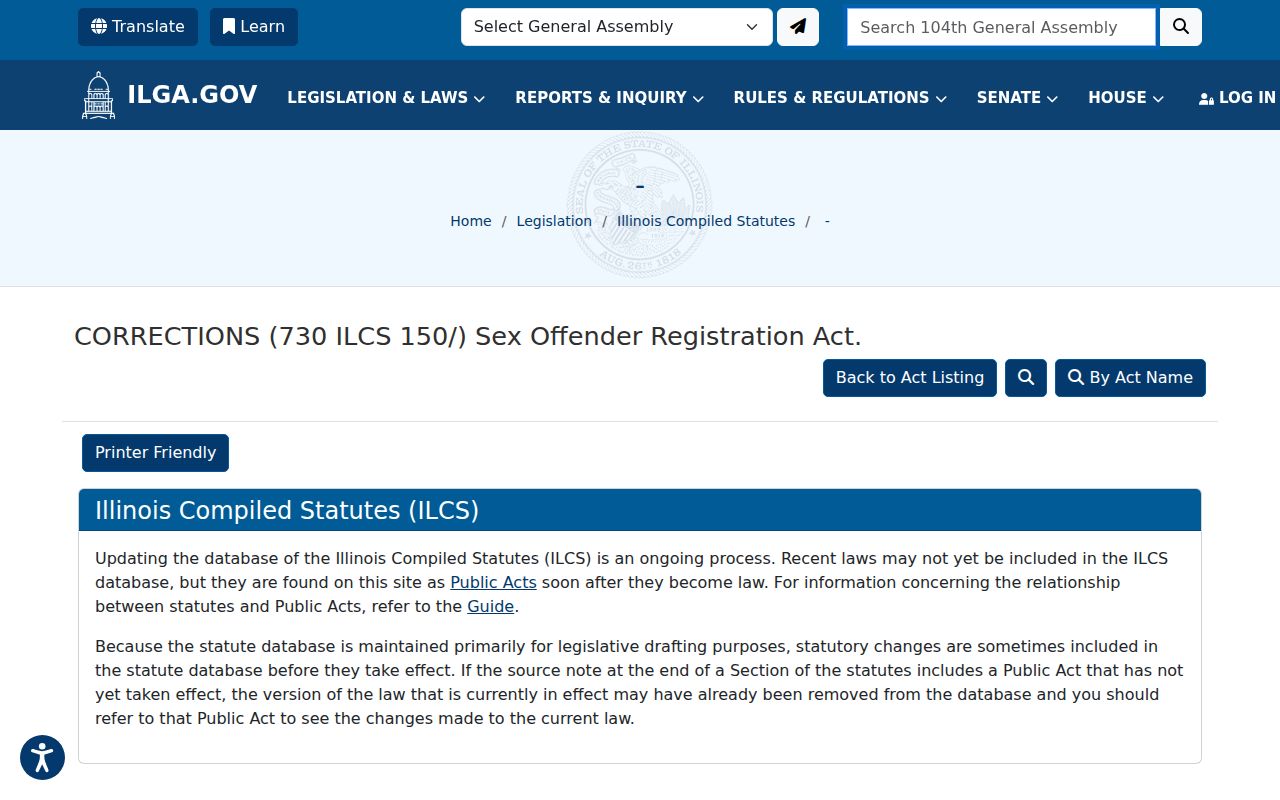
The governing Illinois Sex Offender Registration Act controls who registers and what must be reported. Its rules should be read with the Community Notification Law and current ISP guidance.
The often-cited 500-foot restriction is not identical for every registrant. Adult child sex offender restrictions and juvenile-adjudicated registrant rules differ. Verify the person's statutory category and the current text before stating that a location rule applies.
Duration also depends on legal status and timing. A ten-year period may begin at conviction for probation or after final parole, discharge, or release following incarceration. Lifetime categories remain registered for life, while certain violations can extend or restart a duty. These rules explain why two profiles tied to similar offense descriptions may show different durations or verification dates. The profile and current statute are safer sources than a guessed tier based on offense wording.
Add NSOPW for Cross-State Searches
The U.S. Department of Justice National Sex Offender Public Website adds participating state, territorial, and tribal registries to one search. It is useful when someone may live, work, study, or have registration information outside Illinois.
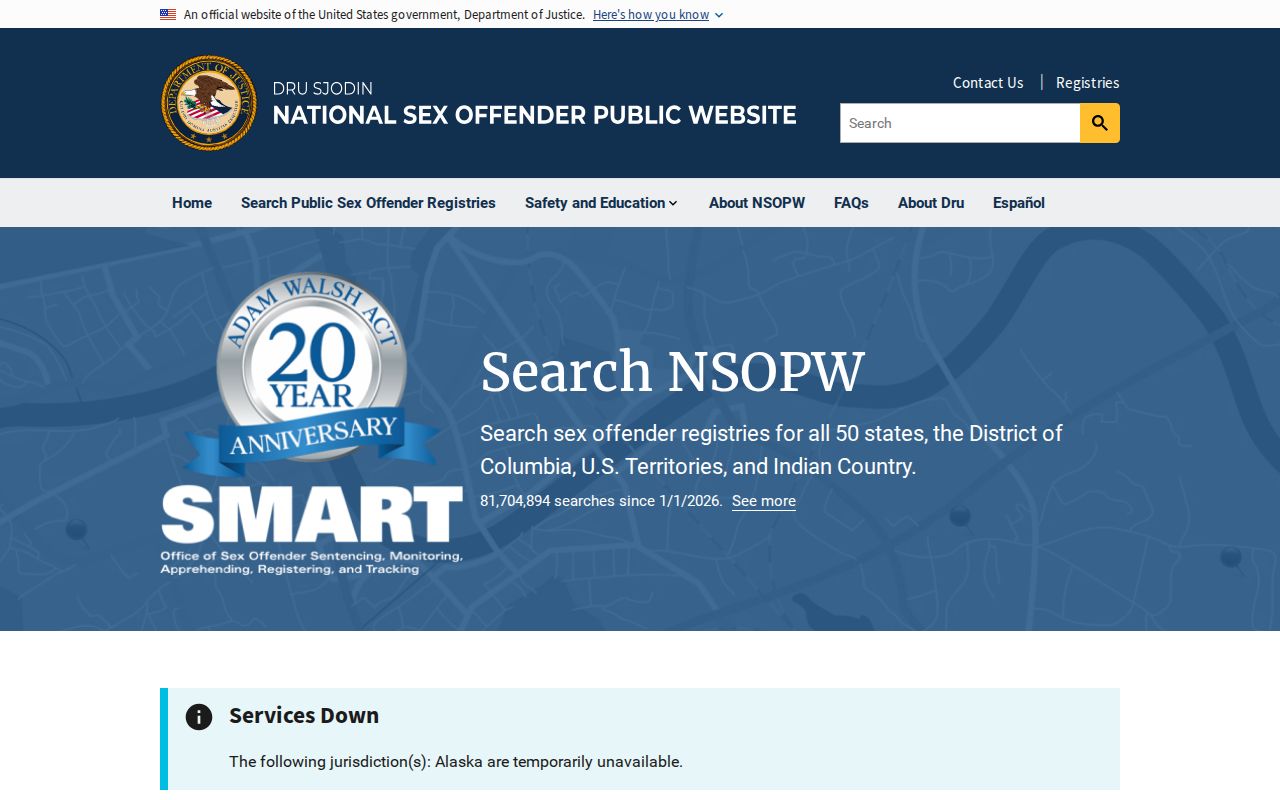
Return to the source jurisdiction's profile to verify details. National aggregation does not turn registry notices into complete criminal histories. Search variations can reflect the source registry's rules, update timing, or matching controls. When the national result and Illinois profile appear inconsistent, verify through ISP and the local registering office rather than choosing the more alarming interpretation.
Lawful Use and Community Notification
Use registry information for community awareness, household safety planning, and verification through official offices. Do not confront a listed person. Immediate danger belongs with 911; suspected failure to register should go to the law-enforcement agency with jurisdiction.
If a Morgan County entry appears inaccurate, use the ISP contact guidance and report the concern to the local registering agency. General questions begin with local law enforcement or the State's Attorney.
When reporting suspected noncompliance, give the agency the public profile and the specific fact that appears inconsistent. Let trained officers investigate. Posting accusations, visiting the address, or contacting household members can create harm and may interfere with lawful verification. Registry notice supports informed precautions; it does not authorize private enforcement.
Use registry data safely: Never use it to threaten, stalk, harass, trespass, retaliate, or discriminate unlawfully. Verify the record with its registering agency and the court that entered the disposition.