
Criminal Cases in Morgan County Courts
Illinois Circuit Courts have original jurisdiction over criminal prosecutions. Morgan County sits in the Seventh Judicial Circuit, and both felony and misdemeanor cases begin in Circuit Court rather than in separate county courts. The Circuit Clerk is the statutory keeper of filed pleadings, dockets, orders, judgments, financial entries, and the court seal. Jacksonville administrative adjudication deals with listed ordinance matters; it is not a second municipal criminal court.
The clerk works at the Morgan County Courthouse, 300 West State Street in Jacksonville. The office lists weekday hours from 8:30 a.m. to 4:30 p.m., phone 217-243-5419, and email circlerk@morgancounty-il.com. The sheriff and jail use 300 West Court Street. That one-word street difference matters when a visitor needs a court file instead of a booking record.
Searching Morgan County Cases Through Judici
The Judici public case search is the remote starting point linked by the Morgan County Circuit Clerk. Choose Morgan County, identified in the research as IL069, then use a party name or case number. A name match is only a lead. Check the case number, filing details, charge entries, hearings, and disposition before drawing a conclusion.
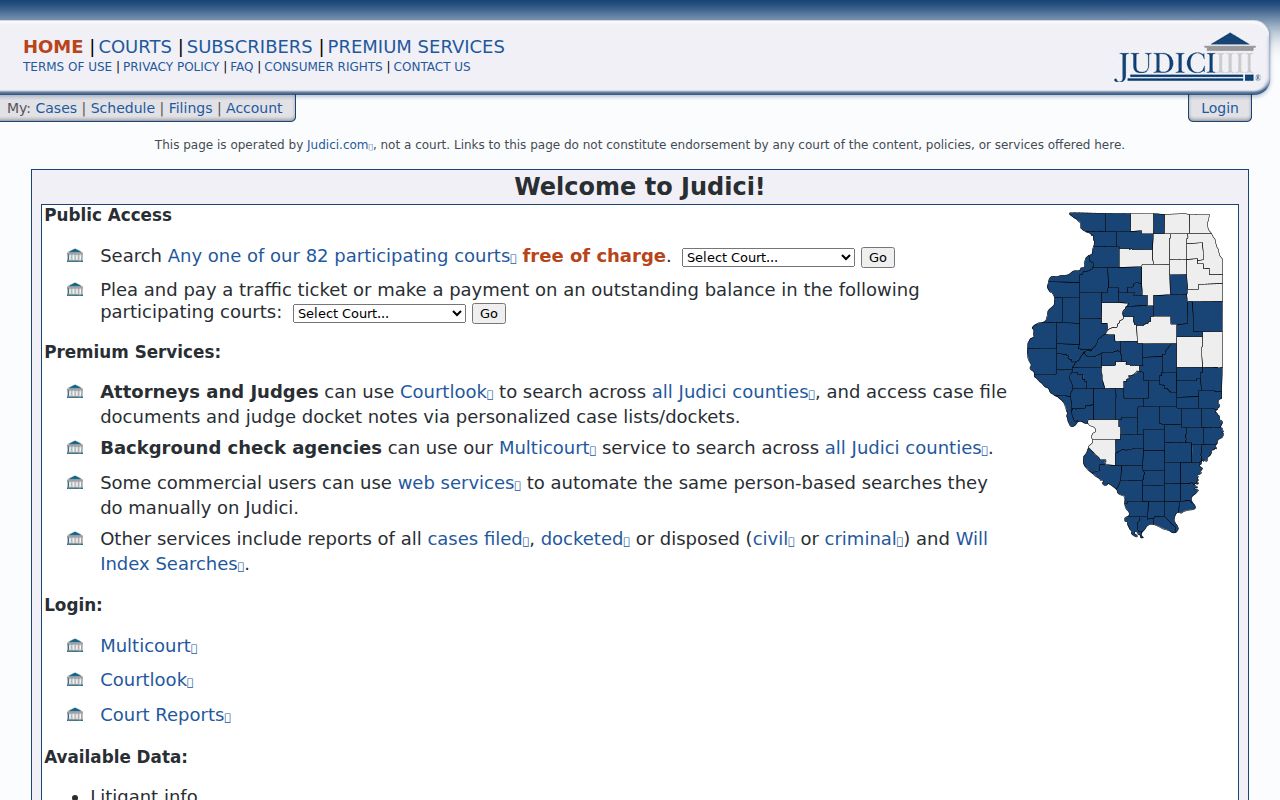
The portal can change, and some document images or added services may require an account. The clerk remains the source for inspection, plain copies, and certified copies.
How to Search Case Records
Good searches move from a broad identity check to a precise court-file request. Keep the complete case number once found because it is the most reliable key for a phone call or counter visit.
- Open Judici and select Morgan County.
- Search by case number when known, or begin with the party's last and first names.
- Compare likely results by filing year and case category; do not identify someone from a name alone.
- Open the docket and trace each charge, scheduled event, order, and final outcome.
- Ask the Circuit Clerk for inspection or a plain or certified copy when the remote entry is incomplete.
| Search control | Type | Required | Use |
|---|---|---|---|
| County | Select | Yes | Choose Morgan County / IL069 |
| Last name | Text | For name search | Pair with first name and verify details |
| First name | Text | No | Narrows common surnames |
| Case number | Text | For number search | Best key for an exact file |
| Filing year or case type | Filter | No | Helps separate similar results |
Judici and re:SearchIL Differ
re:SearchIL should not be treated as a duplicate of Morgan County's Judici access. Since May 2025, members of the public have had free remote access to nonconfidential reviewing-court documents filed from April 2025 forward. Illinois Courts has also stated that statewide public circuit-court document access is still developing.
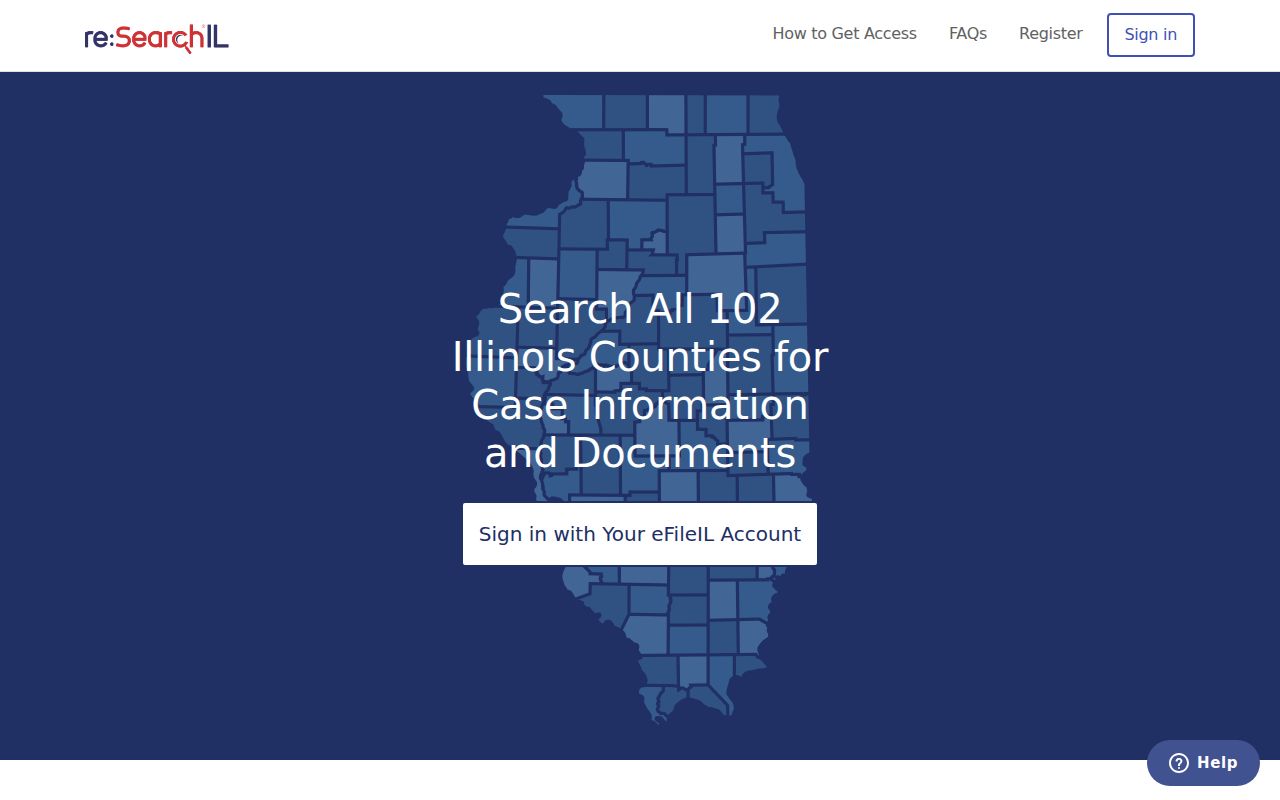
Use Judici and the Circuit Clerk for a Morgan County trial case. Use re:SearchIL when a matter has reached a reviewing court and the public document falls within available coverage.
The difference is practical. A trial docket may contain the complaint, local hearing history, plea, judgment, sentence, and financial ledger. A reviewing-court file concerns an appeal or another matter before an appellate or supreme court. Finding one does not guarantee that the other platform holds the same documents. Start from the court that created the record, then move to the reviewing court only when the docket shows that further review occurred.
What the Case File Shows
A court file records what prosecutors filed and what the judge did. It gives far more procedural detail than a booking entry, yet it is not fingerprint-based like an ISP Access and Review response. Read the docket as a timeline, not as a list of convictions.
| Case Number & Court | The unique file key, Morgan County venue, and case category. |
|---|---|
| Charging Document | The complaint, information, or indictment stating filed allegations. |
| Docket Entries | Appearances, motions, notices, orders, and other court events. |
| Hearing Dates | Past and scheduled settings, subject to later court changes. |
| Disposition & Judgment | The outcome for each charge, such as dismissal, acquittal, plea, or conviction. |
| Sentence & Conditions | Custody, probation, fines, costs, and court-ordered terms when imposed. |
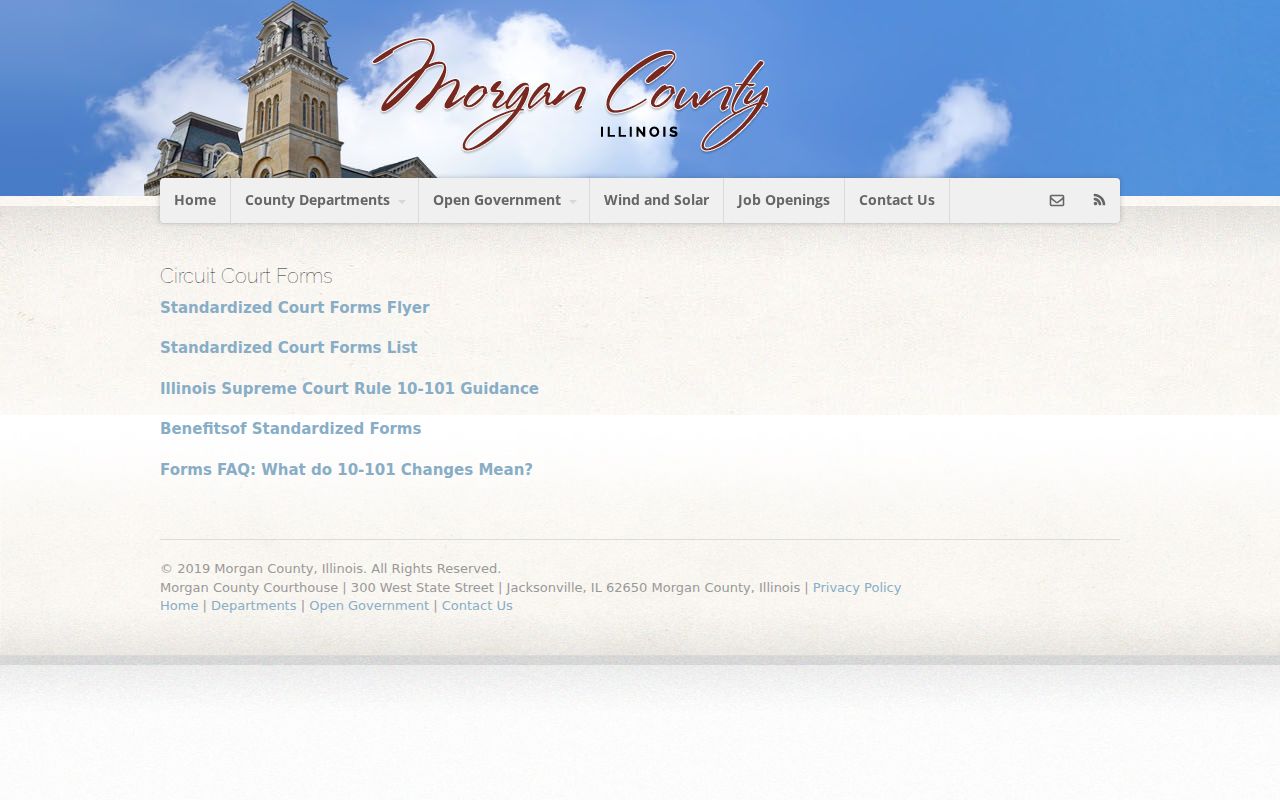
Morgan County also publishes a Circuit Court forms gateway. The forms page helps identify approved filing materials, but a blank form is not a case record.
Reading Morgan County Dispositions
Charge class and disposition are separate fields. A felony or misdemeanor label describes the legal class alleged or filed. It does not say whether that count ended in conviction.
- Disposition
- The court's outcome for a charge.
- Nolle prosequi
- A prosecutor's formal decision not to continue a charge.
- Dismissal
- An end to the charge without a conviction.
- Acquittal
- A not-guilty result.
- Information
- A charging document filed by the prosecutor.
- Indictment
- A grand jury's formal accusation, not a finding of guilt.
Read every count. One case can include an amended allegation, a dismissed count, and a conviction on another count. The final judgment and sentence, not the original label alone, provide the result.
Illinois offense data can also use an AOIC code, the Administrative Office of the Illinois Courts code tied to a charge description, statute, and offense class. That reporting code helps agencies exchange data, but it still does not express the outcome. Match the code and charge to the docket row that records the disposition. Then inspect the sentencing order for custody, probation, fines, costs, or other terms actually imposed.
Stages of a Criminal Case
After an arrest or summons, the prosecutor decides what to file. The court addresses the charge and plea, handles discovery and motions, and may set hearings or trial. A plea, dismissal, acquittal, or conviction resolves each count. Sentencing follows a conviction. Appeals and later post-judgment filings create more docket entries.
Case flow: Arrest › Booking › Charges › Arraignment › Motions or trial › Disposition › Sentencing
The court reports dispositions back to the Illinois State Police Bureau of Identification. If a fingerprint-based self-review lacks a local outcome, obtain the certified Morgan County disposition and use ISP's Record Challenge process.
Timing varies by case. A scheduled hearing is not an outcome, and a continuance simply moves a setting. Review the most recent docket entry before traveling or relying on an old date. For an official current calendar or an unclear event label, ask the clerk and provide the case number.
Morgan County Courthouse Access Tools
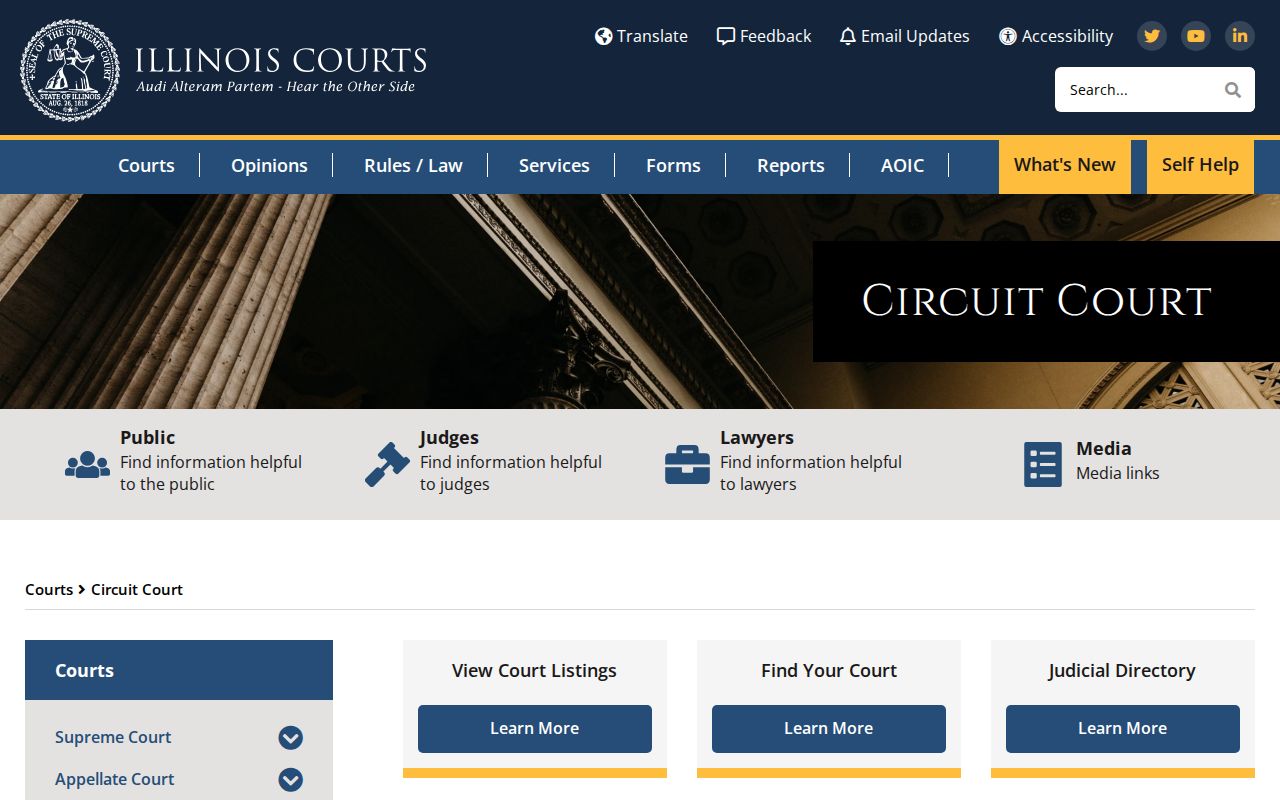
The Illinois Courts circuit-court overview confirms that circuit courts hear felony and misdemeanor cases. It also helps readers distinguish trial records from reviewing-court material.
At the courthouse, visitors can use free lot parking, a basement e-filing kiosk, public internet, a printer, and the third-floor law library. Renovation and accessibility work may affect the active entrance or office route, so confirm details before travel. Older paper matters may also need clerk-assisted retrieval.
Bring the complete case number when possible and state whether inspection, a plain copy, or a certified copy is needed. Certification is the clerk's formal attestation and can matter when another agency needs proof of the disposition. The official local fee schedule exists as a clerk PDF, but costs depend on the requested service. Confirm the current amount with the office instead of assuming that an online summary or document image carries the same legal use as a certified record.
Access & Restrictions
Public access has limits. Juvenile, sealed, expunged, impounded, victim-sensitive, and protected personal information will not behave like an ordinary public file. Remote access can show less than the clerk's official record. A missing portal result therefore does not prove that no case ever existed.
Illinois FOIA governs public-body records, but it does not replace court-record procedures. Ask the Circuit Clerk about a filed case. Use the arresting agency's FOIA route for its police report, and use ISP's UCIA process for public conviction information. If the case was sealed or expunged, only legally authorized access remains.
Access also depends on the product. ISP may publicly disseminate conviction information under the Uniform Conviction Information Act, while a court docket may display nonconviction outcomes such as acquittals or dismissals. A police report can retain allegations that prosecutors later changed. Compare the right sources instead of forcing one result to answer every records question.
Expungement and sealing are distinct in Illinois. Expungement generally directs covered records to be destroyed, returned, or otherwise treated under the order. Sealing limits ordinary public access while preserving uses authorized by law. Eligibility is charge-specific and governed by current statute. When a granted order seems missing from the public docket or ISP record, obtain the court-certified order and use the agency's formal challenge route rather than assuming the relief failed.
Federal Cases Use PACER
Morgan County lies in the U.S. District Court for the Central District of Illinois. Federal prosecutions do not appear as Morgan County Circuit Court cases. Search the official federal docket through PACER, which requires registration and generally charges per page subject to its fee rules.
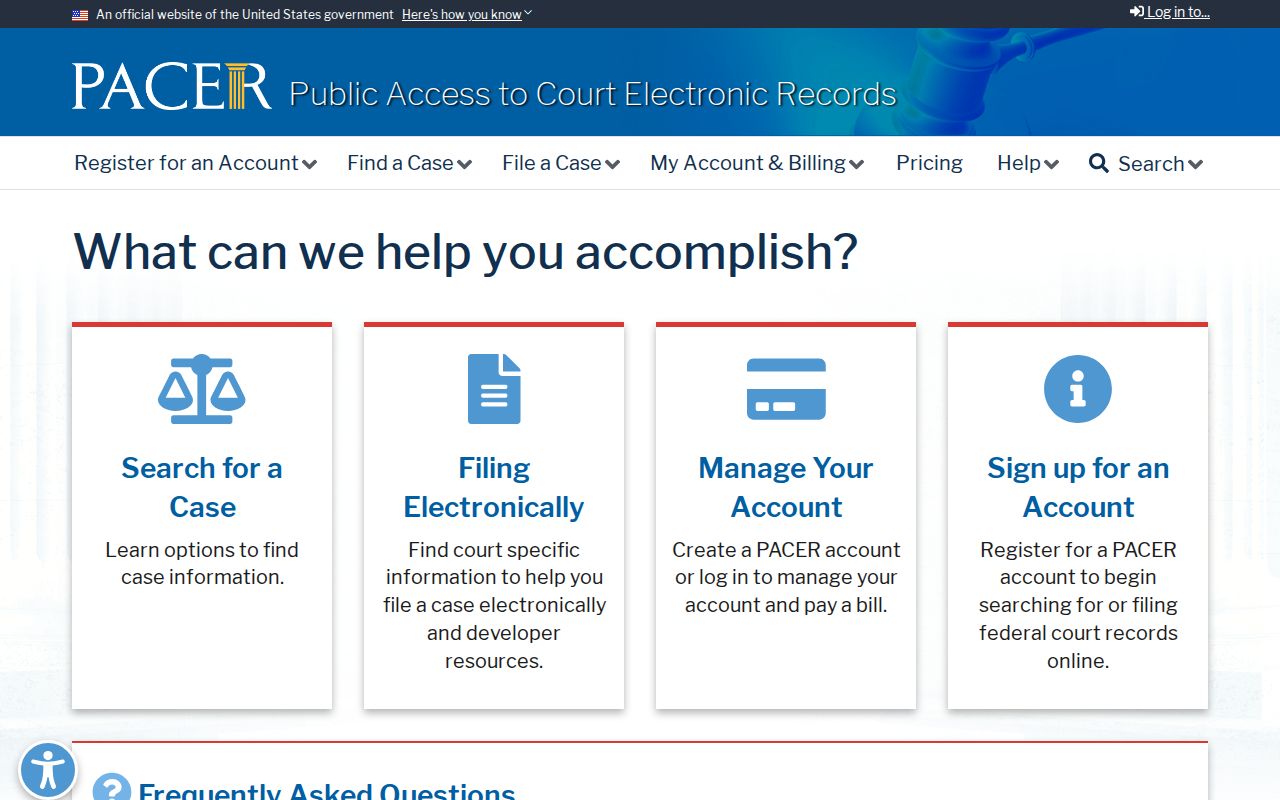
Keep the systems separate: PACER for federal court, Judici and the Circuit Clerk for local trial matters, and re:SearchIL for available reviewing-court documents. The federal Bureau of Prisons locator concerns custody, not the contents or outcome of the federal court file. Likewise, an FBI identity-history self-check is not a public PACER docket search.