
How to Check Morgan County Criminal History
Morgan County has no single official search that contains every criminal record. Begin with the Morgan County Circuit Clerk and its link to Judici when the goal is a filed criminal case, docket, charge, court date, or disposition. Use the sheriff for a sheriff-created arrest report or present jail custody. For your own statewide fingerprint-supported history, use Illinois State Police Access and Review. Each channel has a different custodian and a different legal scope.
Gather the full name, possible spelling variants, an approximate date, and any known case or incident number. A name match is only a lead. Compare the county, filing date, charge, and later outcome before deciding that a result concerns the right person. Older files and documents not imaged online may require clerk help.
- Choose Morgan County in Judici and search by party name or case number.
- Read the case number, filed charge, docket, and disposition as separate fields.
- Call the Circuit Clerk when an image or older file is not available online.
- For a fresh arrest, contact the jail and then the agency that wrote the report.
- Use ISP Access and Review to inspect your own statewide fingerprint record.
Four Morgan County Record Systems
A Morgan County event can leave four distinct trails. The arresting agency writes an incident or arrest report. The jail makes a booking record if a person enters local custody. The Circuit Clerk opens a case file only after charges are filed. ISP then links fingerprint-supported arrest cycles with dispositions reported by courts. A gap in one system does not erase an entry in another.
| Channel | Best use | Main limit |
|---|---|---|
| Sheriff or police | Incident and arrest reports | Only the creating agency's files |
| Morgan County Jail | Current local custody and booking | No public online roster |
| Circuit Clerk and Judici | Filed charges, docket, and outcome | Not a statewide rap sheet |
| ISP Bureau of Identification | Illinois conviction response or personal review | Product scope and access rules differ |
The official clerk page shows the county's court links and contact route.
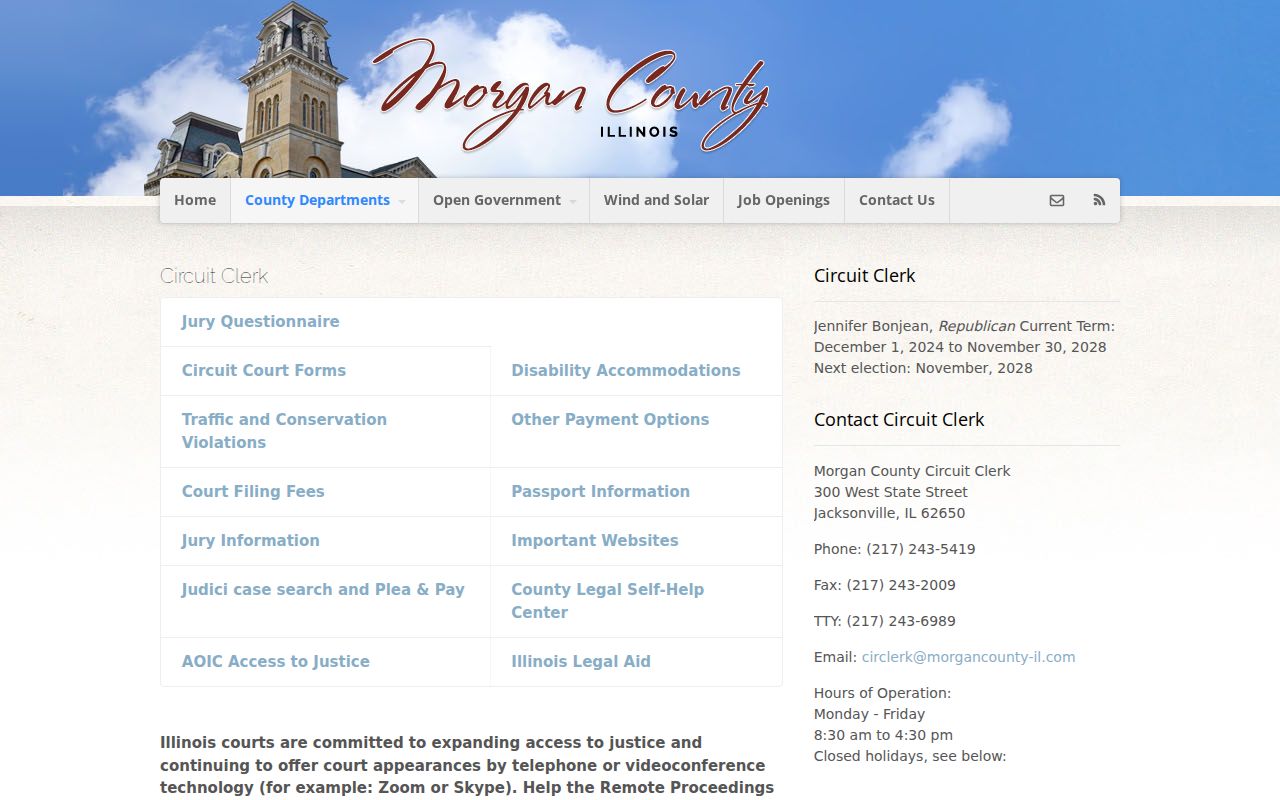
That clerk route is the local starting point for the filed judicial record, not for the sheriff's narrative or the ISP transcript.
Timing shapes the answer. A new arrest may exist at the jail before a prosecutor files a Morgan County case, and a later disposition may take time to reach ISP. Record the date of each check and compare the same count and case number instead of treating a quick mismatch as proof of error.
Official Illinois Background Checks
The Illinois State Police Bureau of Identification is the central repository. Under the Uniform Conviction Information Act, its public response is limited to conviction information. A manual paper name inquiry costs $16, while an electronic name inquiry costs $10. CHIRP is the electronic name-based channel, but it is not a frictionless anonymous people search. ISP says users need authenticated access and an agency or entity relationship covered by an ISP agreement.
For your own record, fingerprint-based Access and Review is the stronger tool. A licensed Illinois live-scan vendor captures the prints, ISP mails the result to the subject, and the packet includes a Record Challenge form. ISP charges no Bureau of Identification processing fee for Access and Review, though the vendor may charge a separate service fee.
Paper UCIA forms carry unique Transaction Control Numbers, and ISP says a copy cannot be processed in place of the original form. Electronic responses are also tracked by TCN. Preserve that number because it links the request to status and retrieval questions. A UCIA fingerprint-card inquiry has a different fee from a name inquiry, while an FBI Identity History Summary is a separate federal self-check with its own fingerprint and payment process.
| ISP route | ISP fee | Scope |
|---|---|---|
| Paper UCIA name inquiry | $16 | Public conviction information |
| Electronic UCIA name inquiry | $10 | Authorized CHIRP workflow |
| Access and Review | $0 | Your own fingerprint-linked Illinois record |
| Court sealing order processing | $60 | ISP implementation after an order |
The ISP name-based inquiry page explains the state route.
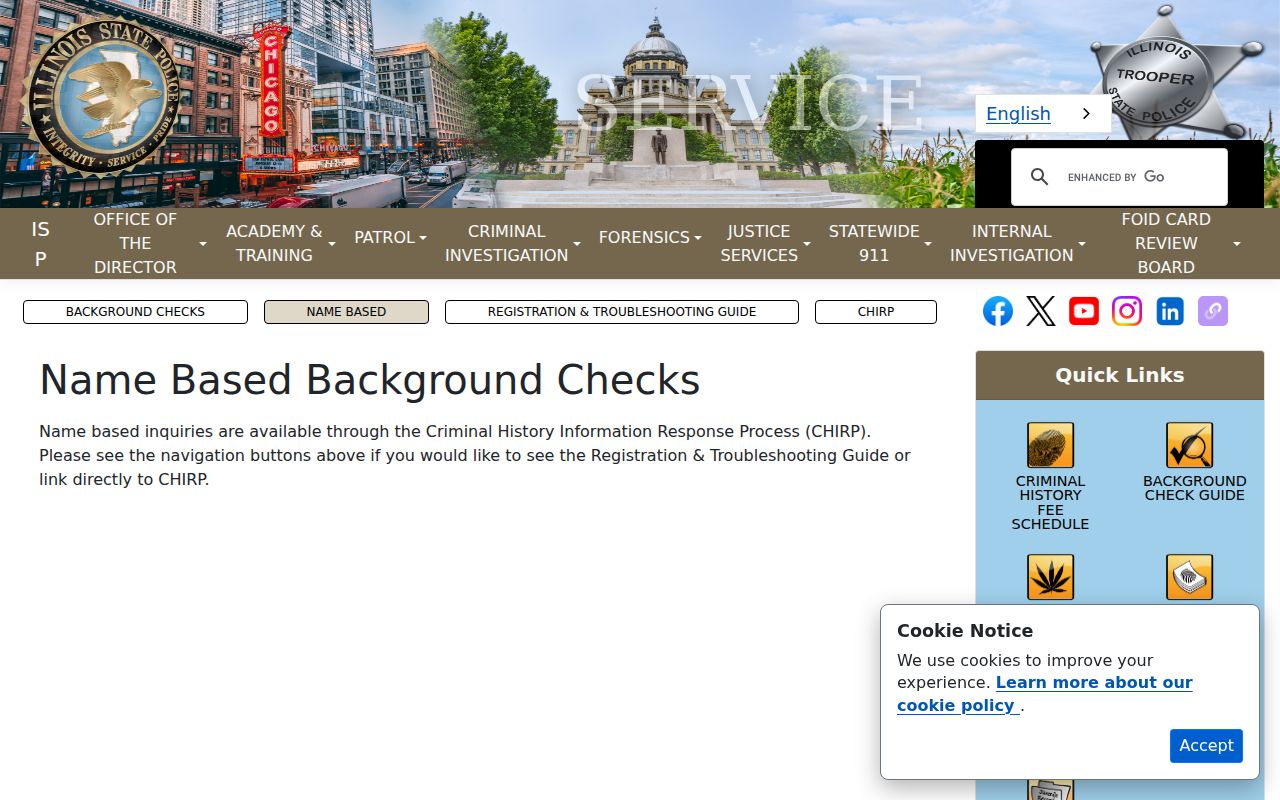
Readers should distinguish the official ISP processing fee from any separate fingerprint-vendor charge.
Review Your Own Illinois Record
Ask a licensed live-scan vendor for Illinois Access and Review, keep the Transaction Control Number, and wait for the mailed response. Compare each arrest cycle and outcome with Morgan County's court file. If a disposition is wrong or missing, obtain the local supporting document and use the Record Challenge form rather than relying on a second name search.
The ISP criminal-history overview explains why the public UCIA product is conviction-only.
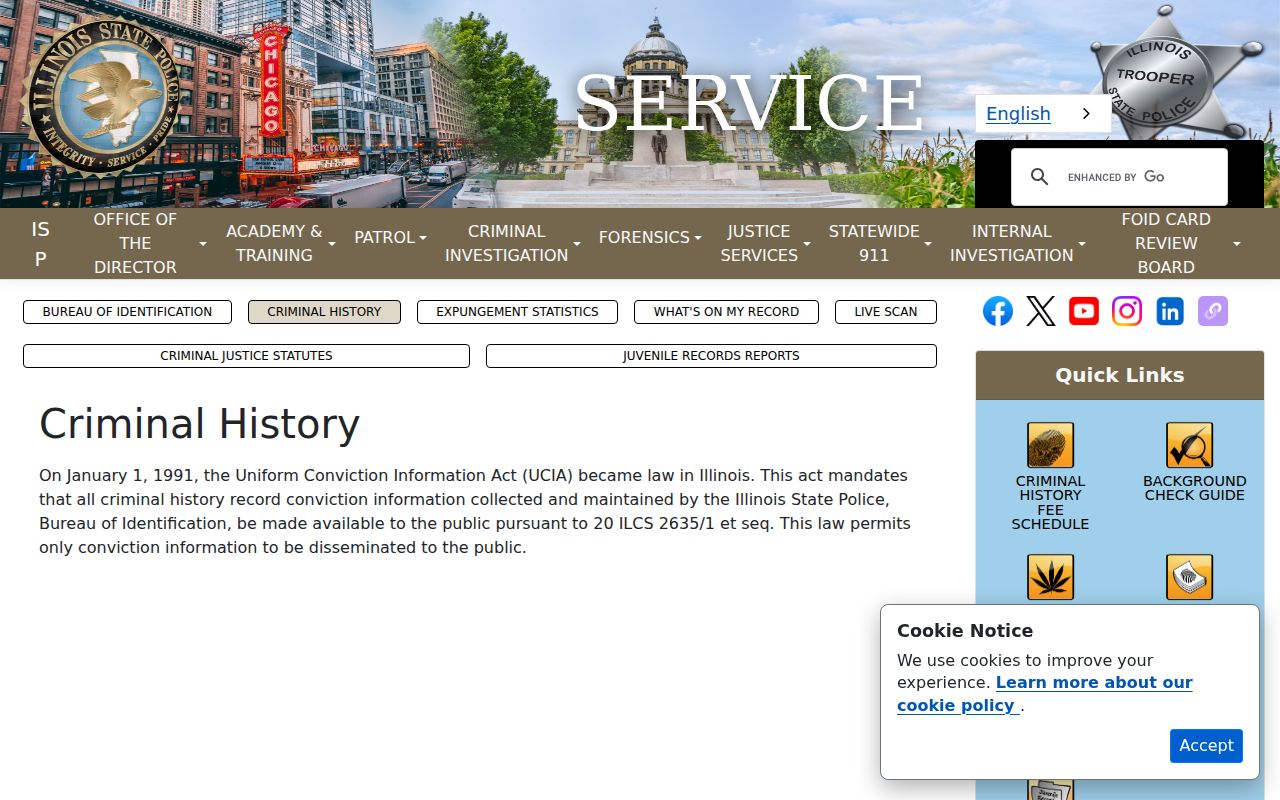
This distinction matters when a nonconviction arrest appears in a personal fingerprint review but not in a public conviction response.
Types of Criminal Records
Morgan County criminal records differ by the act that created them. Police and deputies make incident and arrest reports. Jail staff create intake and custody data. Prosecutors file complaints or informations, while a grand jury may return an indictment. The Circuit Clerk preserves the filed case, orders, disposition, sentence, and financial entries. ISP maintains the statewide history built from agency and court reporting.
Warrants, probation entries, IDOC custody records, and registry profiles have still different keepers. A judge issues a warrant, local probation administers a community sentence, IDOC holds prison and parole or mandatory-supervised-release data, and local law enforcement sends qualifying registration information to ISP.
- Arrest and booking records describe an allegation and a custody event, not guilt.
- Criminal court files show what was filed and how each count moved.
- ISP histories link reported arrest cycles and dispositions.
- Warrants require direct confirmation because Morgan County posts no public list.
- Supervision and registry records serve narrower statutory purposes.
Morgan County Has No Jail Roster
No inmate-search or booking-log link appears on the official sheriff page. For present local custody, call the Morgan County Jail at 217-243-6123 or visit the sheriff counter at 300 West Court Street during weekday counter hours. Ask with a full name and approximate arrest date. For releasable booking material, contact sheriff FOIA officer Adam Potter through the same number and confirm the current written route.
The Morgan County Sheriff page supplies the official office and jail contact.
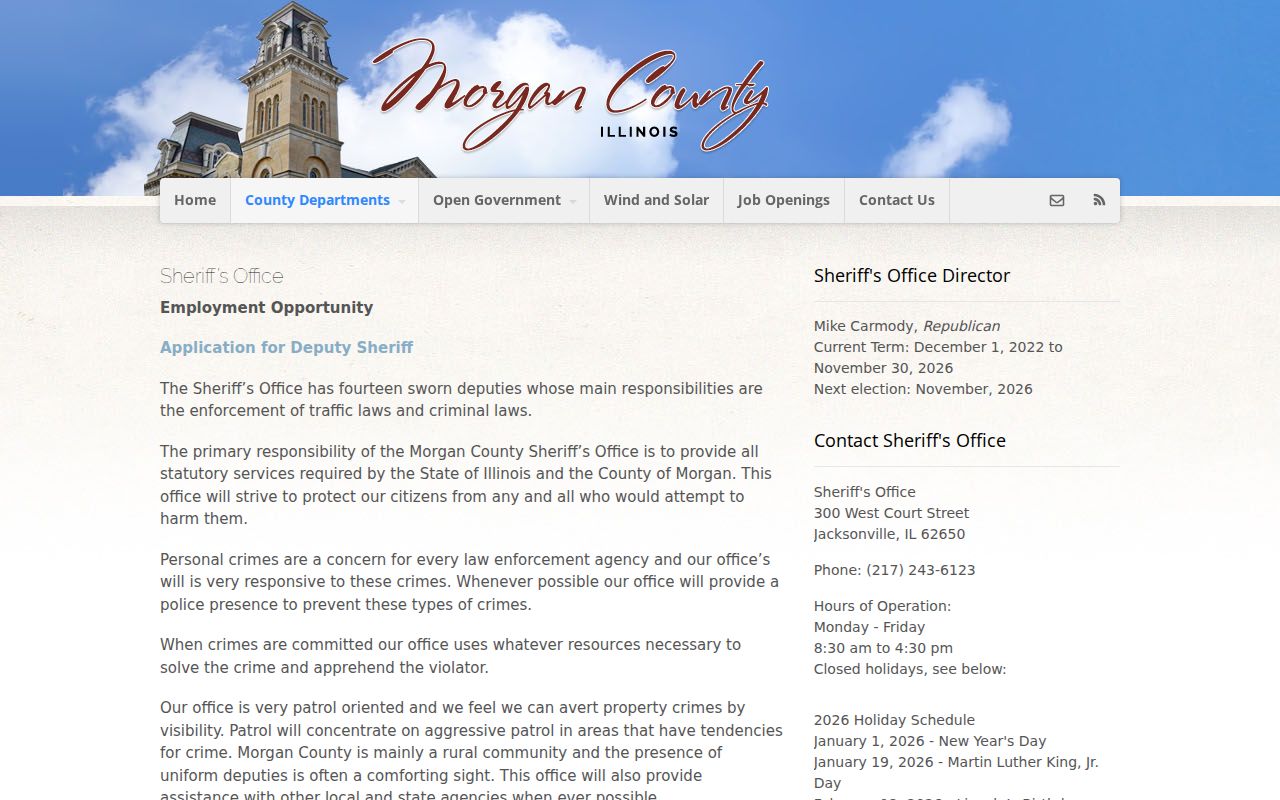
A lack of current custody can mean release, transfer, or no county booking. It does not settle whether an arrest or filed case exists.
Sentenced state custody belongs in the IDOC Individual in Custody Search. A person who completed an IDOC sentence may not appear in the live locator, so older state custody research can require IDOC's Record Search contact route. Federal custody is a third track through the Bureau of Prisons locator.
What a Morgan County Criminal Record Shows
An ISP history is organized around identity and event cycles. A Morgan County court record instead centers on a case number and procedural events. Keep each field in context. The initial jail charge can differ from the prosecutor's filed count, and that count can differ from the final judgment.
Several Illinois terms help decode the fields. An AOIC code is the offense code used in court and justice reporting. A SID is the state identification number tied to fingerprints. A disposition is the count-level outcome. Nolle prosequi means the prosecutor chose not to continue a charge, while an acquittal is a not-guilty result. Supervision, probation, parole, and mandatory supervised release describe different outcomes or forms of oversight and should not be merged into one status.
| Name & Identifiers | Legal name, aliases, birth data, SID, FBI number, and fingerprint identifiers where authorized. |
|---|---|
| Arrest / Booking Data | Arrest date, agency, originating number, intake data, and alleged charges. |
| Charges & Statutes | Description, Illinois citation, AOIC code, count, and offense class. |
| Disposition | Dismissal, acquittal, conviction, supervision, or another count-level outcome. |
| Sentence | Custody, probation, fines, costs, or other terms following judgment. |
| Custody / Supervision | Local probation, IDOC custody, parole, or mandatory supervised release where public. |
Morgan County Courthouse Record Access
The Circuit Clerk works at 300 West State Street in Jacksonville and can help with inspection, plain copies, and certified copies. The official directory lists public internet, a printer, a basement e-filing kiosk, a third-floor law library, and disability coordination. Current construction and restoration work make it wise to confirm the public entrance and office location before a visit.
The Illinois Courts courthouse directory records those access details.
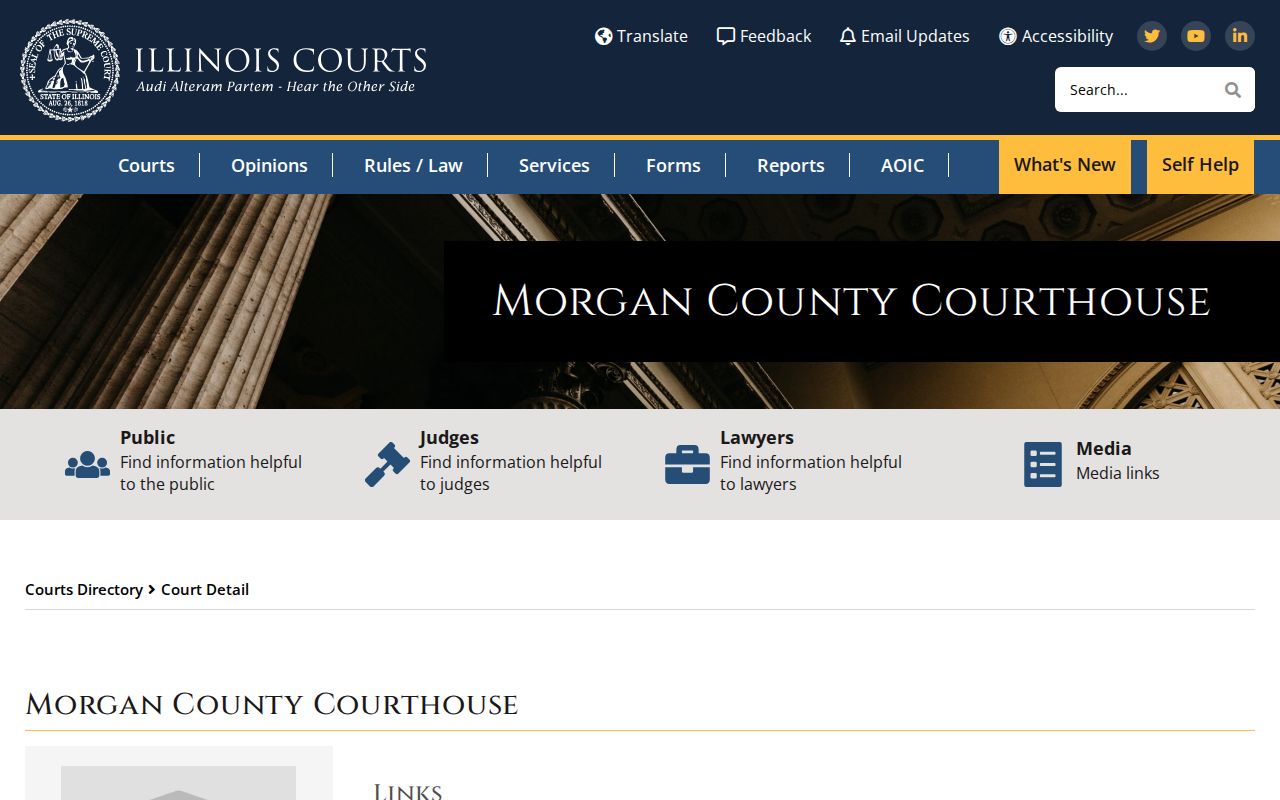
The clerk's State Street address must not be confused with the sheriff and jail at the same street number on West Court Street.
Public Access Laws
Illinois law does not place every Morgan County record under one disclosure rule. FOIA governs public-body records and exemptions, but it does not replace court-record procedures. UCIA controls the public ISP conviction response. Court policy and confidentiality rules shape remote access to filed cases. Sealing orders, juvenile law, victim protection, and active-investigation exemptions can lawfully remove or redact material.
A no-result screen has several possible meanings. The matter may be sealed or impounded, the event may belong to another county, a recent disposition may not yet have reached ISP, or the selected product may exclude the type of information sought. Confirm the search spelling and venue, then ask the record custodian about coverage. For your own record, a fingerprint review is safer than assuming that an empty name result proves the event never existed.
Key Statutes:
5 ILCS 140 sets Illinois FOIA access and exemptions for public agencies.
20 ILCS 2635 limits the public ISP product to conviction information.
20 ILCS 2630/5 requires agency and court reporting into the repository.
20 ILCS 2630/5.2 governs adult expungement and sealing.
Morgan County FOIA Record Fallback
The county names individual FOIA contacts rather than offering a sheriff request portal. Call the correct office first, describe the record with an incident number or approximate date and place, and ask for the current written submission method. Do not use the county's generic contact form, which expressly says it is not for FOIA requests.
The Morgan County public-records page identifies the appropriate officers.
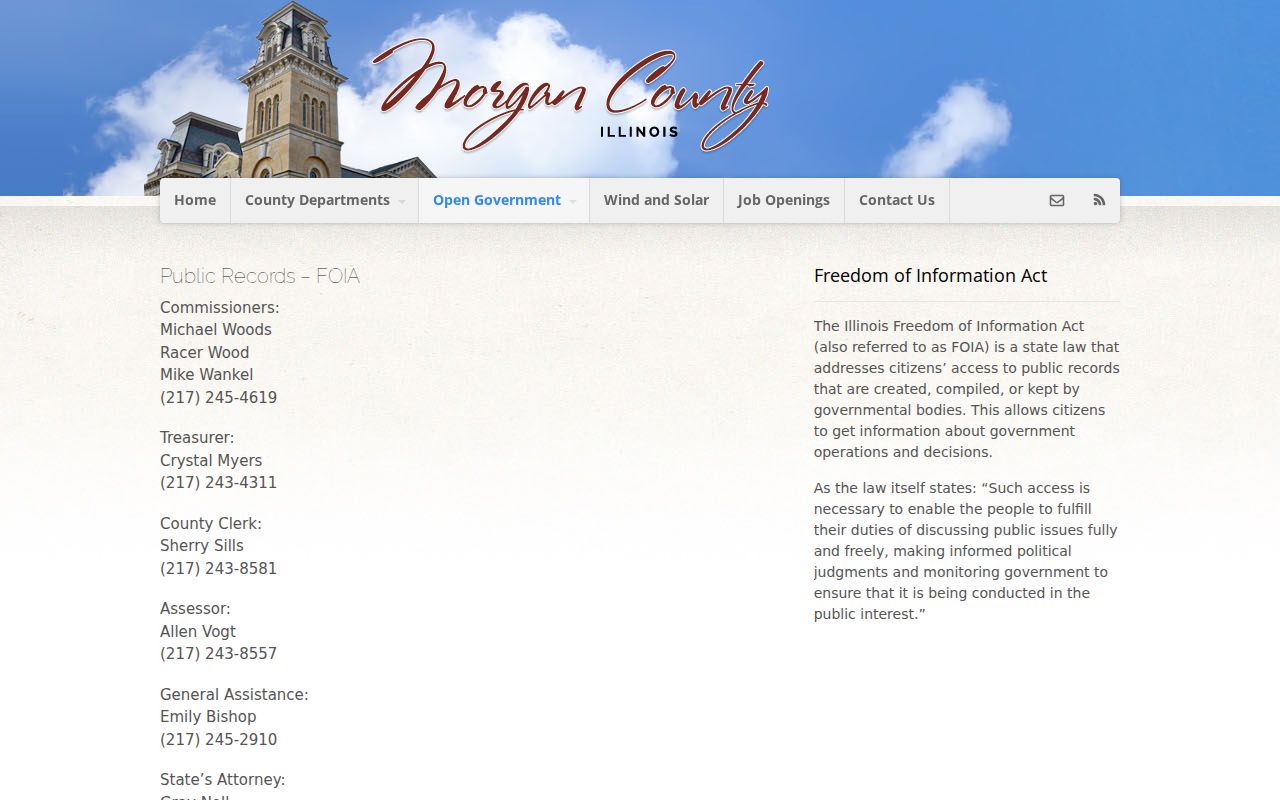
FOIA is most useful for an agency-created report. Filed court documents still belong with the Circuit Clerk.
Sealed, Expunged & Restricted
Illinois distinguishes expungement from sealing. Expungement generally removes or destroys covered records as the order directs. Sealing blocks ordinary public access but preserves access that a statute authorizes. Eligibility depends on each charge, outcome, sentence, waiting period, and statutory exclusion. Dismissals and acquittals may fit common expungement paths, while many eligible convictions may be sealed. Serious excluded offenses require close review of the current law.
Use the statewide Illinois Courts forms, file in the Circuit Court tied to the Morgan County case, and verify implementation after an order. The clerk sends statutory notice to the State's Attorney, arresting agencies, and ISP. If the event remains on your ISP response, use a certified order with Record Challenge.
Morgan County Probation and Parole
Morgan County Probation at 340 West State Street administers circuit-court community sentences. IDOC Parole Division supervises parole and mandatory supervised release after state prison, while the Illinois Prisoner Review Board sets conditions and handles its statutory release functions. The Circuit Clerk remains the source for the sentence order and public violation filings.
The county probation page gives the local office route.
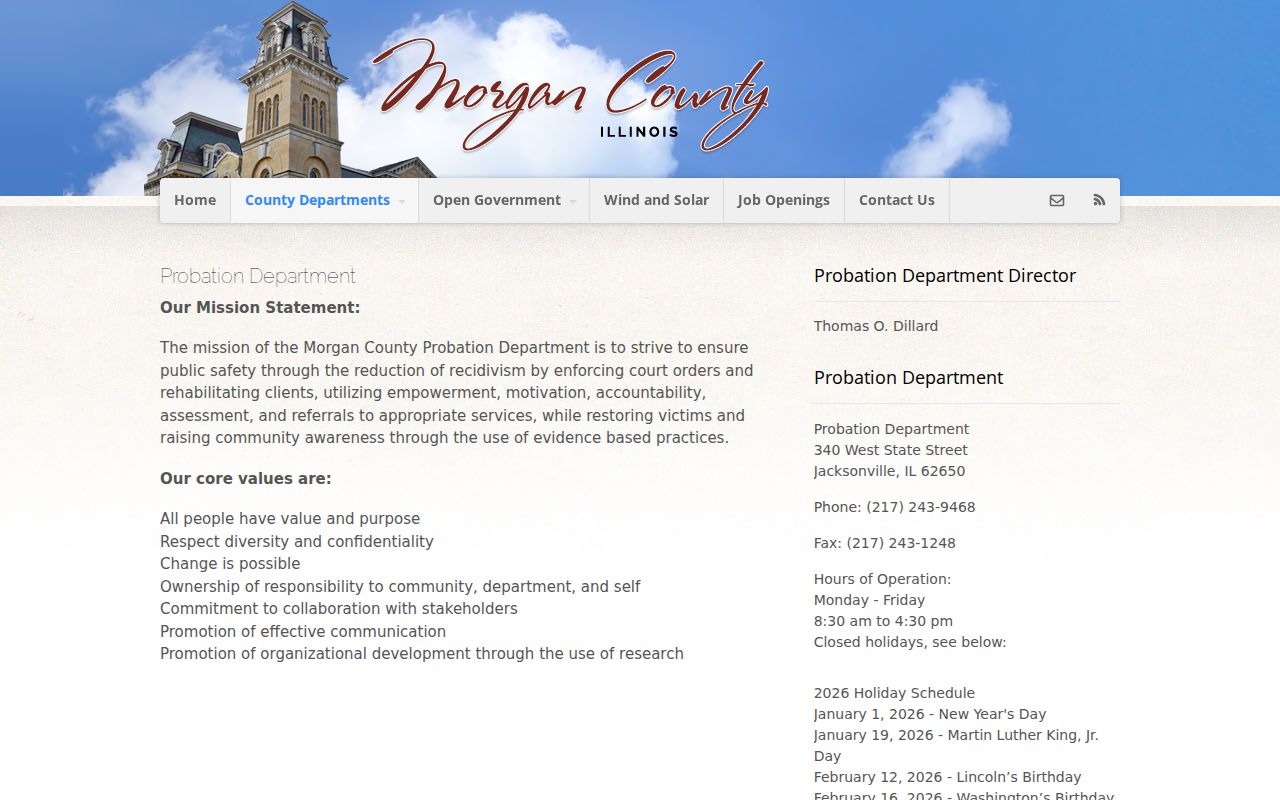
Use the office that matches the type of supervision rather than treating probation and parole as interchangeable.
Morgan County Records Through Time
Morgan County was organized in 1823 and has used three courthouses. The first burned in 1827. The second served until the present limestone courthouse was occupied in 1869. That long paper history helps explain why an older criminal file may need clerk-assisted retrieval even when current docket data is online. Restoration and accessibility work also mean today's visitor should verify access before arrival.
The county's official courthouse history traces the record building's past.
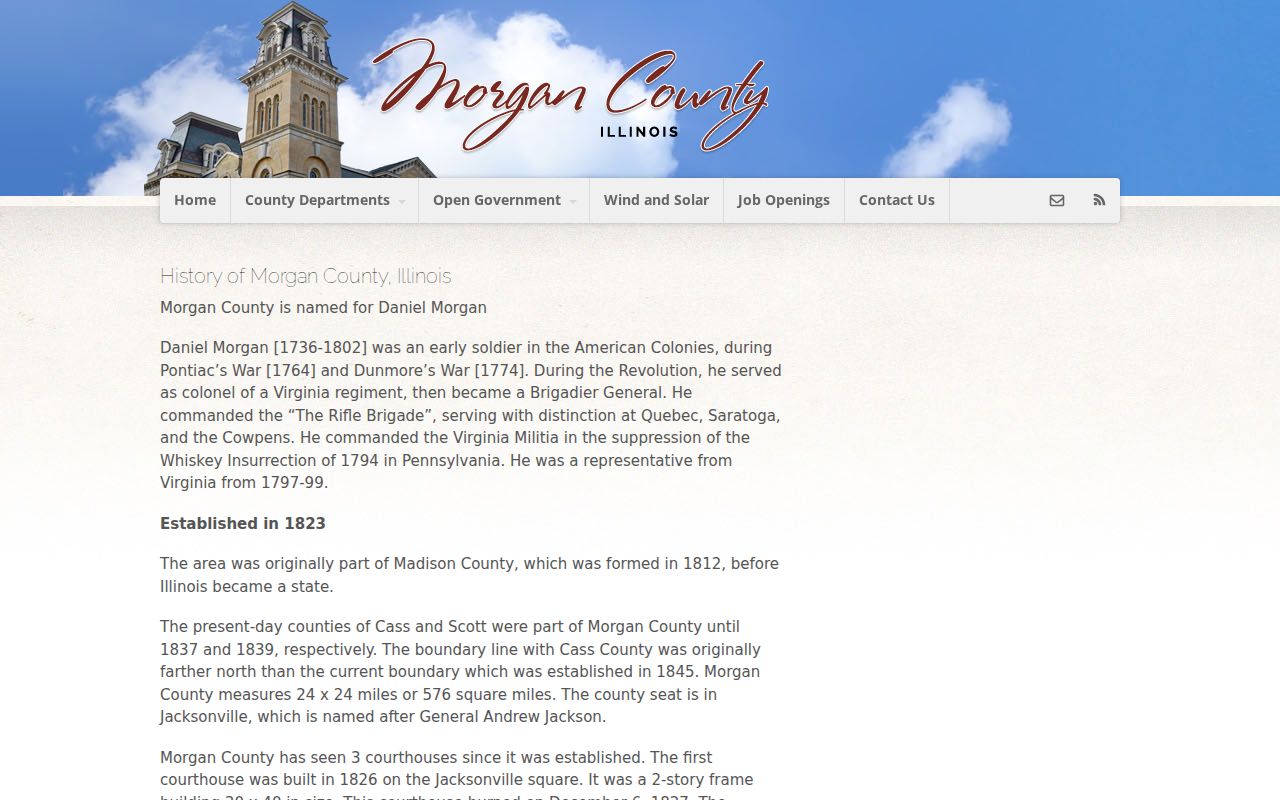
The historic setting does not change custody: the Circuit Clerk, not a general county archive, controls filed case records.
Criminal Records by City in Morgan County
Morgan County has only two incorporated places classified by the Census Bureau as cities: Jacksonville and Waverly. Their police departments keep city-created reports, but filed criminal cases move to the Morgan County Circuit Court. Jacksonville also has administrative adjudication for ordinance matters, which is not a separate criminal court. Waverly routes after-hours police needs to the county sheriff.
Jacksonville Criminal History
City police reports, online FOIA, administrative adjudication, and county case routing.
Waverly Criminal History
Local police requests, city FOIA steps, and after-hours sheriff coverage.
Morgan County Record Geography
The county's main record offices sit close together but use easy-to-confuse addresses. The Circuit Clerk is at 300 West State Street. The Sheriff and Jail are at 300 West Court Street. The State's Attorney is in the courthouse, while probation works from 340 West State Street. Calling before a trip helps avoid the wrong counter.
The Census Bureau county profile supplies official geographic context.
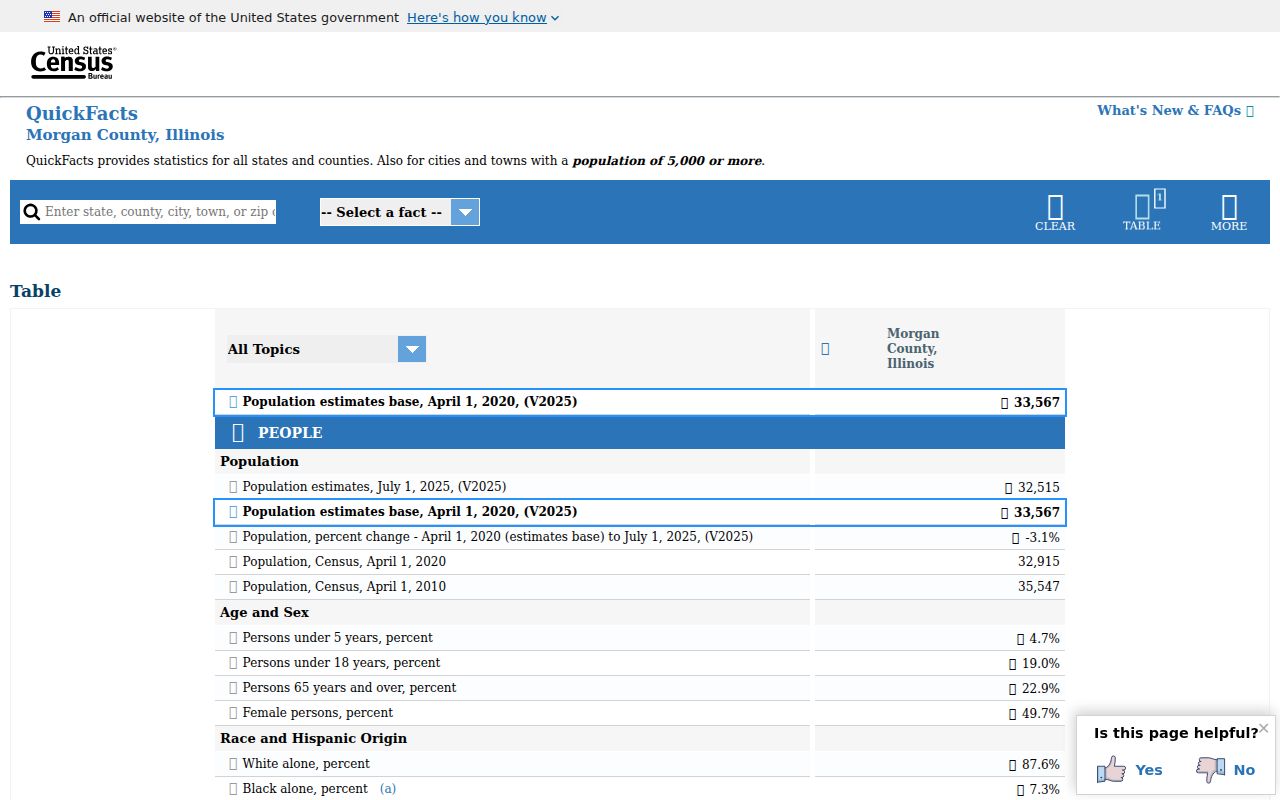
That compact geography does not merge the records. Each office keeps the product its legal role creates.
Jacksonville police records remain with the city even when the county jail books the person. Waverly reports likewise begin with Waverly, though after-hours response may involve the sheriff. Once a criminal charge is filed, both routes converge at the Morgan County Circuit Clerk. The event location is therefore as useful as the name when planning a search.